Philosophical Zombies and Selfish Introspection
In these changing times, it's difficult to simultaneously be a mathematician and a non-complaining person. Complaining, hating society, blaming the world—these are all excellent retreats from reality. This isn't to say those are incorrect. Fundamentally, they are largely why we face problems. In our introspection, we behave like selfish solipsists, describing how we are being infinitely wronged by the people, the weather, the government (this might have some validity), the mosquitoes, the constant of feeling lost, the perenially blooming eczema, the slight over-moisturization of my fingers on the violin fingerboard, the periodically loosening screw mechanism within my favourite mechanical pencil that causes inexplicable breakages at important moments, and so on. We think these things only because we think, and we take that as evidence that we are being wronged by everything that is not ourselves. Everything and everyone else is a barrier to individual progress, whatever that means, if that even is the goal.
I recently came across, in a course, the term philosophical zombie, a theoretical living organism that behaves exactly like one yet is unable to think, at least in the sense that it does not feel nor does it experience—it only acts and reacts. It almost feels as though humanity is converging more and more toward an enormous commune of philosophical zombies—not because we do not think or have some kind of phenomenal experience, but because what we perceive and believe we feel is becoming increasingly manufactured and infected by the philosophical zombies who now pulsate through the world. How can we prove to ourselves that we aren't philosophical zombies? Complaining about artificial intelligence in mathematics is the natural thing to do, and yes, I care about getting a job in the future, but it seems so petty in the grand scheme. I'm tired of complaining.
I spoke to my mentor and graduate student friend in the 4th year of his PhD, and his prospects appear rather bleak—the academia pipeline, modulo the intrisic competitiveness and difficulty in the field, now reveals the impossibility of achieving a reasonable research career in the midst of AI. After a PhD, the natural next step is to apply for postdoc positions, then for tenure track professorship positions. I think he recognizes very clearly this struggle. Why do you do mathematics? Again, this question comes about. G.H. Hardy probably gave an eloquent answer about braving the unknowns of mathematics alone yet with a kind of intense determination and self-confidence, and, from this, perhaps an emergent sense of self-identity and service toward the pinnacles of humanity and human achievement. Perhaps Hardy was onto something, but the only answer to that question is really: "I am selfish."
Is that really such a bad thing, anyway? Does humanity have an obligation to be in service of its future? Its past? Society may criticise artists, musicians, and general creatives for being generally unhelpful for the technological advancement of humanity, yet there exists an intrinsic recognition that there is tangible value to creation, emotion, beauty, mellifluousness, and so on. Perhaps this is where humanity has an obligation to be in service of its present.
Yet something like this is inconvenient. It takes time. Take board games for example. As a semi-pseudo enjoyer of board games, why should I move pieces around a board and manually keep track of multiple moving parts if I could digitize the entire scheme and forget about the tedium?
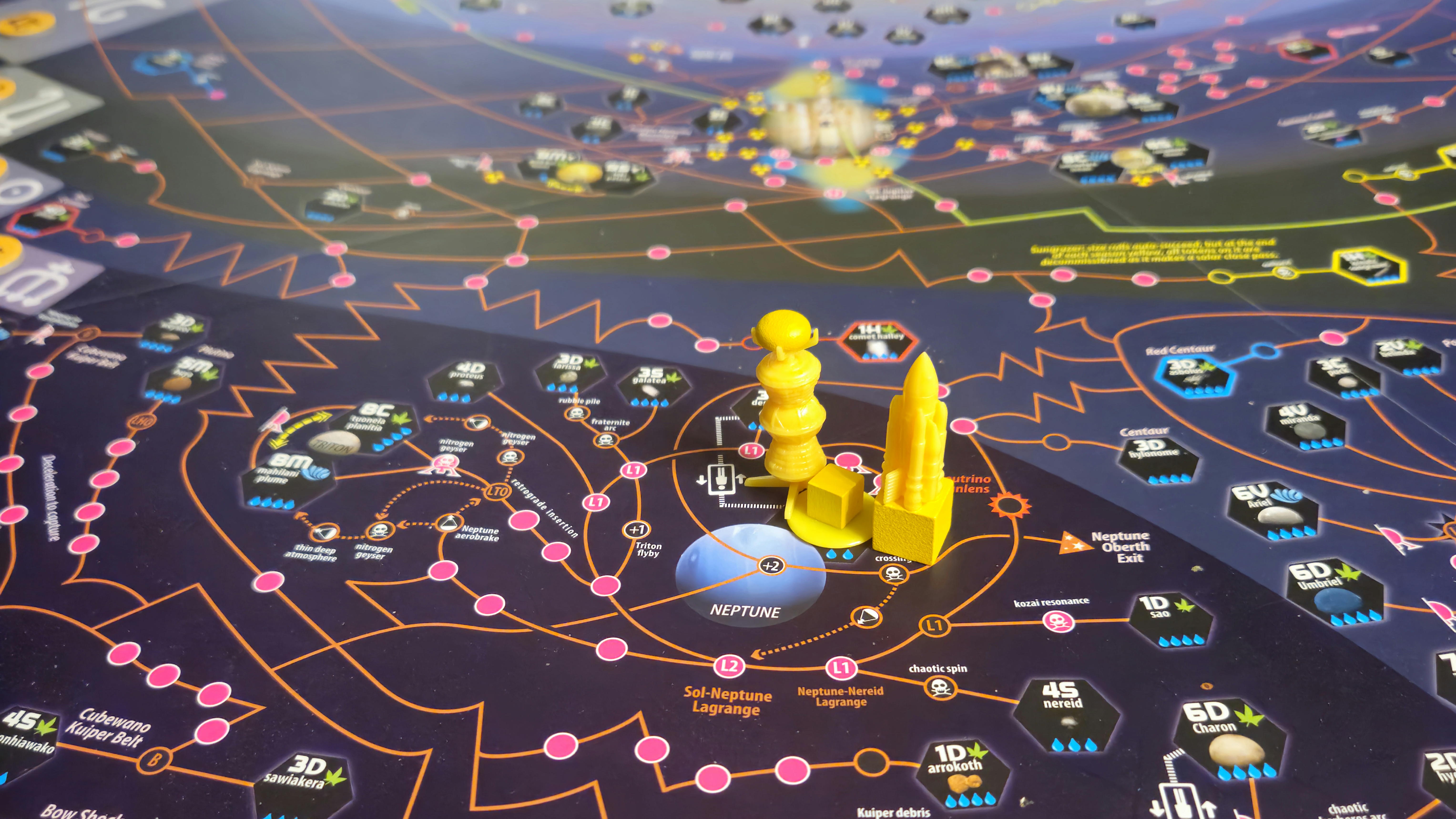
As a violinist, why do I care about the tediousness of violin technique and accuracy when, theoretically, I will never be as good as the masters?
Perhaps a deeper question revolves about trying to reconcile our own recognition of mediocrity with the looming existence of non-mediocrity. Why do we do anything if we will never be the best at it? In mathematics particularly, it is infinitesimally likely that neither I, my graduate friend, nor my younger professors, will obtain something like a Fields medal.
So how does this discussion fit into the broader discussion of artificial intelligence and mathematics? Well, it shows that we are pre-assuming a notion of novelty in mathematics and reacting to artificial intelligence retroactively. I maintain again that the real novelty of mathematics is the fact that we can be excited about teaching mathematics to people, not necessarily in extending further. So many mathematical theories and ideas go untaught and untouched—exclusivity might entertain some, but should a selfish mathematician not proudly proclaim "I want everyone to know about this theory!"? The gap between PhD theses and frontier mathematics research is now as large as ever, and artificial intelligence, compounded with the wrong kind of selfishness, has created an illusion of desperation. Another declaration, signed by a collection of Fields medalists, addresses the issue of students directly:
The mathematical community functions, in many ways, as a miniature version of humanity. It consists of individuals using a wide variety of different approaches, joined by core values. The most precious resources of our profession are students and ideas, and these we nurture with great care. We feel responsible to let them grow to their full potential, until they can live a life of their own in the mathematical world. For students we often suggest problems with the core intention of developing skills making them well-positioned for advances in research and elsewhere.
Are we really running out of time? Assuming that the AI alignment problem raises enough concern such that humanity decides to give itself some room to breathe, the ruins of mathematics will still take time to rebuild. Let us bridge the gap. Perhaps, in the meantime, we should focus on what makes us happy and feel human, like playing the violin or board games or spending hours thinking. Just to keep our sanity.
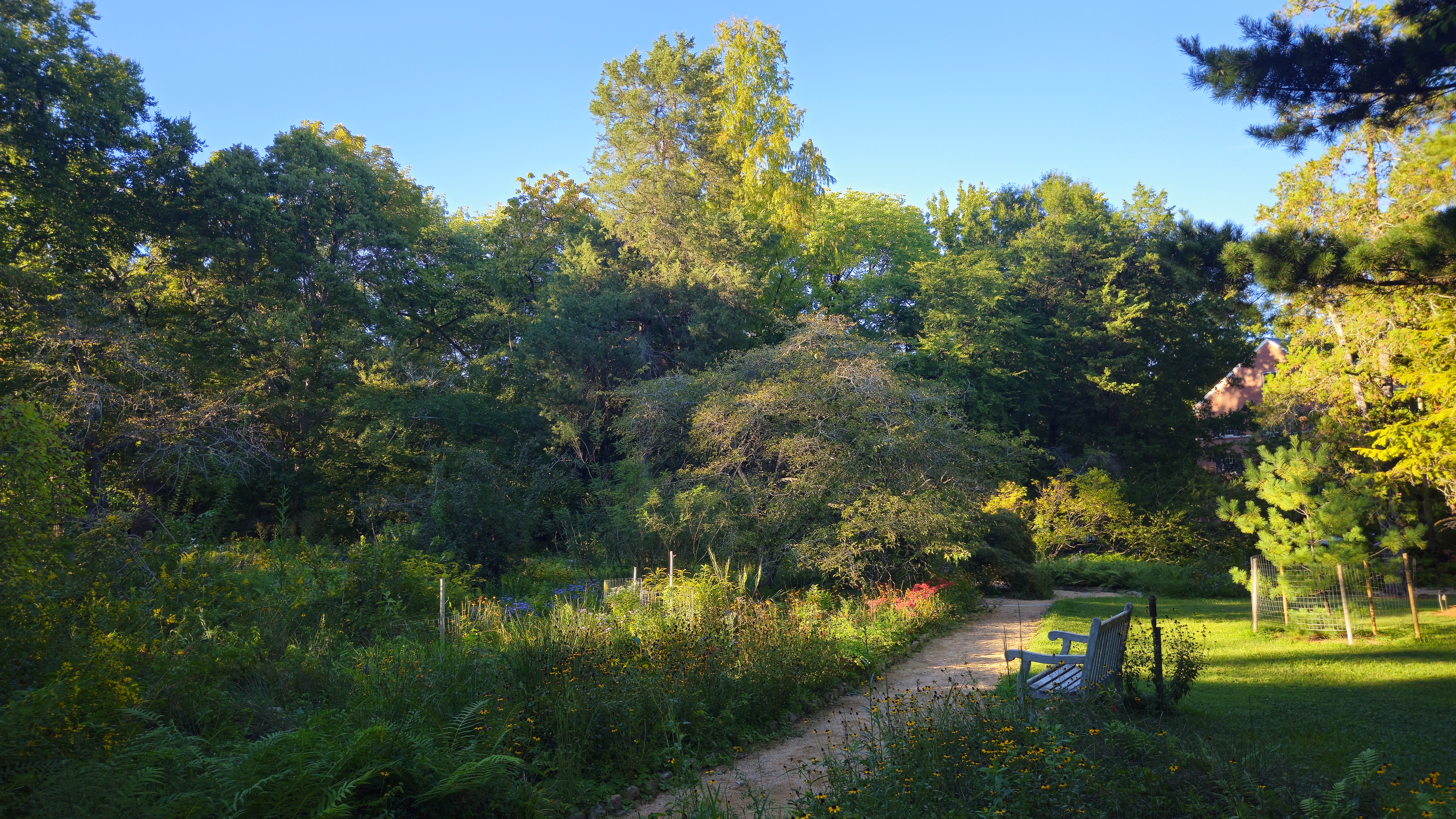
It's strange. So much internal turmoil and self-reflection on a career that may not even exist in five years. And yet autumn still comes about. The leaves haven't changed yet in Chapel Hill, but there's a nod toward gradually dimming sunshine in the evenings. The temperature has become cooler (with occasional periods of hot humid air). Sigh.